REVIEW: King Lear (Summer Shakespeare)
Game of Thrones [by James Wenley]
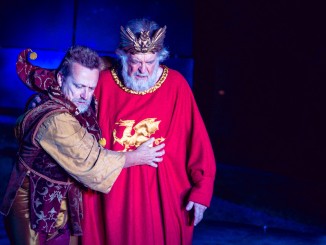
When I consider King Lear I think of the high grand tragedy, the demands of the title role and the master actors who have played him, and I conjure the harrowing image of the old man against the storm on the heath. It was pleasing to be reminded that the play begins (where it all begins really) with humorous sexual bawdy concerning the mother of Gloucester’s bastard son Edmund – “good sport at his making” - rather than anything loftier. The action of this production of King Lear plays out on a large circular stage by designer Jessika Verryt – an image of a flat earth that at any moment they could teter off. It is a fitting image for a play that contains the gamut of human experience: family feuds; wisdom and madness, power and greed; compassion and the worst inhumanity and violence mankind is capable of. The mix of themes high and low and the damning portrait of humankind is the best stuff of Mr. William Shakespeare. But what truly elevates Lear specifically from others in his canon is its focus on our weakness and mortality. Death not by the swift sword, but - to borrow the sentiment of another Shakespeare tragedian - death by a thousand natural cuts. Verryt’s stage also becomes the wheel of time that will catch all in the end be they Kings, Popes, academics: the tragedy of the aging; decay of the body and the mind.
At the far side of outdoor lawn at the Old Arts Quad are images of great beauty: the heavens, the cosmos. Behind them are shining lampposts that dot the paths behind the set that by happy accident seem extend out and back, enlarging the vista. Brad Gledhill’s lighting complements the disappearing light of the out in the open evening. We are situated amongst this all too: tiered seating on two sides is like a sheer cliff, and we look down at the players from above. Edmund speaks of the folly of blaming and crying out to the heavens as if “if we were villains by necessity; fools by heavenly compulsion”. In Director Lisa Harrow’s production her figures are all too earth bound, focussed on themselves and their own quest for power, cut off from anything higher or worthier. Making her directorial debut, Harrow presents a production that is grounded, uncluttered, and where the text is King.
REVIEW: Much Ado about Nothing (Summer Shakespeare)
Shakespeare does it again! [by James Wenley]
Turns out that Much Ado about Nothing is actually much ado about quite a lot of things…
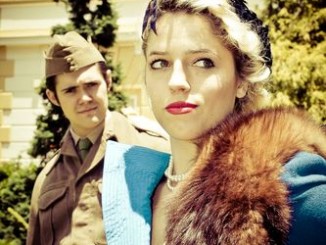
In some ways a ‘greatest hits’ of Shakespeare’s devices, Much Ado’s comedy takes in bumbling authority figures, a disguised seduction, various tricks played on characters, a Shrew-like Battle of the Sexes… there’s even a sort of small boy Richard III villain, and the plot threatens to get all Romeo and Juliet when, upon the suggestion of the friar (you have to watch out for them), the heroine Hero fakes her own death. In brief, such stuff that Shakespeare does so well.
The University of Auckland Outdoor Summer Shakespeare production, directed by Sam Pascoe, promises Shakespeare under the stars. With this weather, it’s more accurate to say Shakespeare under the clouds. No matter, for who would want to be watching the skies when the action on the lawn is so good.
Much Ado revolves around two couples – Claudio and Hero, who fall instantly in love with each other, and Benedick and Beatrice, who fall instantly in hate. But when they are tricked into thinking that the other one loves them, Benedick and Beatrice tie themselves instead into love knots.