REVIEW: The Pride (Silo)
What DOES it mean to be gay? [by Rosabel Tan]
You want a play to change you. You want it to take you by surprise, to delight you, to hurt you. You want it to whisper in your ear three days later when you’re trying to focus during a staff meeting about strategy and best practice. You want it to be meaningful, in whatever way it intends.
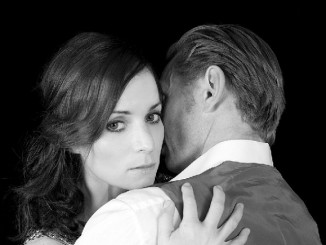
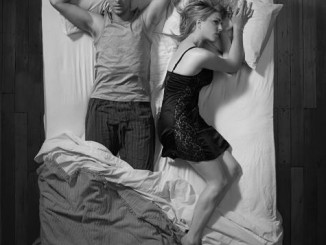
In his notes, Alexi Kaye Campbell explains that in writing The Pride, he was interested in the notion of gay identity. “In what it means to be gay in 2009 and how that definition was formed.” We’re presented with the same three characters, Sylvia (Dena Kennedy), Oliver (Kip Chapman) and Philip (Simon London) dealing with the issues of identity and love and betrayal in two parallel timelines: the first is in London in 1958, when homosexuality was a crime punishable by up to two years in prison. Sylvia, a former actress, has been illustrating one of Oliver’s children’s books and has invited him over for dinner. She’s desperate that her husband Philip – an uptight real estate agent – and Oliver get on, and it’s clear from the suffocating silences and stammering conversation that they will, though it won’t be an easy ride.
PREVIEW: The Pride (Silo)
A matter of pride [by Sharu Delilkan]
A heterosexual woman at the helm of a thrilling contemporary narrative predominantly focussed on the gay issues could have been a point of concern. But nothing could be further from the truth when it comes to Sophie Roberts' role as director for The Pride.
Her history of working on productions with gay themes has made her role in The Pride a natural progression in her career.
“I have done quite a few gay-oriented plays so I am quite comfortable dealing with those issues. I also like working with or highlighting the perspective of people on the fringes of society. I find such work more interesting and enjoy working in that territory. I strongly believe that theatre has a social and political function, which is why I seek out work that talks about these issues. And the fact that the gay marriage bill coming up in parliament gives the content of the play a lot more weight and relevance,” she says.
PREVIEW: Yours Truly (Basement Fest)
Jack the Ripper finally comes to Auckland, and he’s got a knife… [by James Wenley]
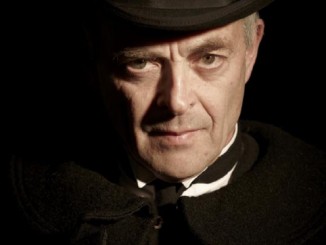
When I met Anders Falstie-Jensen during his lunch break from rehearsals at the Basement, he was beaming and full of enthusiasm for his latest project. The play he is directing, Yours Truly sounds like a ripper. Jack the Ripper to be precise. Written by Albert Belz, the play promises to be one of the scariest and darkest thrillers from a New Zealand playwright.
But other than the subject matter, there is something else for Anders to be excited about – the play marks a significant milestone for Anders and his theatre company The Rebel Alliance (whose Fringe offering Standstill I really enjoyed). For the first time, thanks to a grant from Creative New Zealand, Anders can go to paid full time work, 9-5, as a theatre director…
Yours Truly has been a long time coming to the Auckland stage. It debuted at BATS Wellington in 2006 and won Best New Zealand Play at the Chapman Tripp awards, but save for a production in Whangarei it all but disappeared. Playmarket had first alerted Producer/Director Anders Faltsie-Jensen to the play in 2008, but due to busyness it lay unread on his desk for three months. “When I finally got around to reading it – as soon as I finished it”, Anders says, “I biked down to the office and said I really want to do this show.” Unfortunately, Anders was told that the rights were no longer available.
Surely kicking himself for not reading it sooner, Anders was presented with another opportunity when the rights went back up, but with a catch. A guy called Sam was also interested in the play...
REVIEW: The End of the Golden Weather (Auckland Theatre Company)
Milk and Honey Dreams [by James Wenley]
The End of the Golden Weather has got to be one of the great New Zealand stories. As a play, it’s endured far beyond its intended lifespan. Playwright Bruce Mason wrote it partly as a platform for himself, performing the work solo across NZ in the decades for a staggering 986 performances, until his death in 1982.
But the Golden Weather was to continue. The play not only continued its solo tradition with a select few actors being entrusted with the play, but has been adapted for many actors – Raymond Hawthorne did a company version in the 80s, and Ian Mune directed the film in 1991.
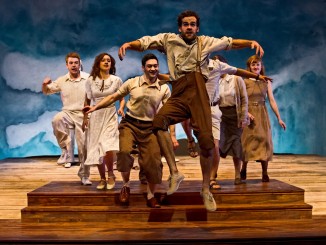
Auckland Theatre Company’s production, part of the Real NZ Festival and just in time for the Rugby World Cup influx, is an ensemble version for 9 actors, which has its roots in similar productions Murray Lynch directed in 1987 and 1990. Interestingly, both Lynch and ATC’s artist director Colin McColl stage-managed the play for Bruce Mason himself early in their careers. This play looms large in our theatre history.
REVIEW: Well Hung
Auckland Theatre Company give the police a good bollocking
It is one of New Zealand’s most enduring unsolved crimes. The year is 1970. The place is Pukekawa, small town NZ. The bodies of husband and wife Harvey and Jeanette Crew are found in the Waikato River. The murder weapon is established as a .22 rifle. Local Farmer Arthur Allan Thomas is arrested. A shell case from Thomas’ rifle is found in the Crewe’s garden. He’s convicted. A no brainer. End of story. Move on.
But we didn’t. Peopled talked about a ‘miscarriage of justice’. A second trial returned the same result. BUT a Royal Commission established by PM Muldoon pardoned him. The findings were SCANDALOUS and rocked the public’s trust of the police force. Two officers had PLANTED the shell case. They were never charged. And the case is still unsolved: Who murdered the Crewes? There are salacious rumours that one of the police investigators did it. But we still don’t know 40 years later. What a farce.
And it is. Or at least, it inspired one. Playwright Robert Lord (1945-1992) used the case as inspiration for Well Hung. It centers on a similar small-town double murder case and the complete balls-up bungling of it by the police investigation.
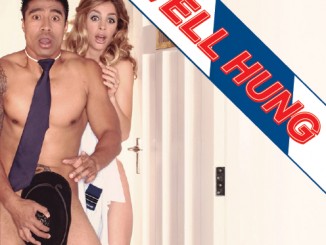
The play is very, very, very silly. There are silly walks, the actors run into doors, Carl Bland gets rubbish bins stuck on his feet and Pua Magasiva spends much of the show in his underwear. Director Ben Crowder, making his much welcomed mainstage debut for ATC, notes that Farce is not currently in vogue in New Zealand. He describes Lord’s script as a “grand example of the form lurking in New Zealand’s theatrical past”. And he’s right – the play ramps up the misunderstandings and sticky situations to such a high point that the tension – which can only be released with a large belly laugh – is almost unbearable. I suspect that the reason why farce is so rare on New Zealand stages is not because it is necessarily unpopular, but because it is so hard to do. Farce can be perilous.
The entire play is set in the main room of a charming retro 1970’s police station, designed by the versatile Andrew Foster. There are lots of doors. Good. They open throughout the play revealing peeks of what is behind…a toilet, a storage cupboard, the holding cells with anti-pig graffiti… and I marvel at the challenge it must have been to get all the sight-lines right!
The play opens with duty officers Sergent Bert Donelly (Simon Ferry) and Constable Trev Brown (Pua Magasiva) engaged in comic banter, with some (considering the title) obligatory discussion of penis size (eight inches!). Pua wears flip-flops and a thin mo. Simon wears shorts, knee high socks, and a full police issues 70’s era mustache. Pua’s Brown is a good study of a vain cop who doesn’t take his vocation seriously, constantly preening and showing off his body; he’s using the police phones to facilitate the sale of a second-hand car on which he has wound back the miles. Ferry’s Donelly is the most sympathetic character (for most of the play at least), the only cop appearing to be focused on the case. Ferry plays him with much needed reserve and understatement, grounding a play that is populated by larger than life and high energy characters.
Carl Bland’s Detective Jasper Sharp is the largest of them all. And I reckon his entrance, with some very literal toilet humour, is the moment audience members will either make the mental switch to embrace Well Hung’s silly humour, or watch in silent bemusement. Sharp bursts in, prancing about the stage like Inspector Clouseau. He’s been assigned the case from the big smoke, but is far more interested in his own media profile and scoring appearances in New Zealand’s Woman’s Weekly. Ignoring the available evidence, he chooses his murder suspect – Adam Turner, the most important man in town - based solely on the amount of column inches he will get. Bland is deft at the double take, and he makes much use of clowning comedy skills; the character has a habit of physicalising many of his verbal thoughts. Bland walks such a delicate tightrope with the character – too much energy and the character can fall flat. Not all silly walks are inherently funny. Far more often than not, the bold choices do hit and I suspect Bland has a very fun season ahead riding the waves and energies of different audiences.
In double supporting roles Dena Kennedy and Adam Gardiner are a riot. Dena is a classic and recognizable kiwi sheila as Bert Donelly’s philandering wife Lynette, and on the money as amateur theatre director and backyard abortionist Hortensia. Dena’s commitment to smacking into things deserves special mention. I hope ATC are paying for her bruise ointment! Adam Gardiner displays his flair for character quirks in the backward Wally, a kiwi version of Monty Python’s Gumby characters, and milks all the humour in Adam Turner’s bad leg and crutch. The script calls for them to change character repeatedly, and (like Michael Hurst and Oliver Driver’s character swapping in Irma Vep a few years back) there is much delight when exit as one character and enter as another – helped along by a well used body double at one point!
Crowder keeps the show moving in a rapid pace, and the ball high up in the air. He has a knack for exploiting all the comedy possible in the already funny scenarios, but sometimes the jokes are over signposted just a tad too much. Crowder indulges in naughtiness too, like a little child pushing to see how much mummy and daddy will let him get away with. It’s juvenile, but amusing. Lord’s script is very clever, and includes many lines that could only come from a New Zealand writer – “Just popping out for a Pinky”, or even “I’m very proud to be having your abortion”!
From all this you could be forgiven for thinking there is a disconnect between the silliness of the play, and the seriousness of the Crewe case and murder in general. The case, after all, has left an indelible mark on New Zealand’s pysche, reappearing every few years in the papers (most recently last year when surviving daughter Rochelle was denied a new inquiry). Should something like this be joked about? Murder in the media is often incredibly sensationalised, whether to sell newspaper copy (Carmen Thomas?) or act as a convenient plot device (endless CSI re-runs).
Robert Lord’s play must have been remarkable at its 1974 opening*, channeling the public anger surrounding Arthur Allan Thomas’ conviction. Though disguised as Farce, Lord COMPLETELY rips into the police, the system, and the institution that could see an innocent man go to jail. Lord portrays the police as fools, buffoons, and criminals. They are well and truly hung.
With a certain amount of public distrust of the police, and with much work by the force still to be done (witness Dame Magaret Beazley’s report into police culture), Auckland Theatre Company’s revival is not only a welcome airing of what can be surely now recognised as a classic of New Zealand theatre, but a damning reminder that the force is not always infallible.
Well Hung plays at the Maidment Theatre until Saturday 5th March 2011
* This production of Well Hung is actually a hybrid form of two versions of the play by Robert Lord. Script Editor Stephen Sinclair took the best parts of 1974’s Well Hung and Lord’s later rewritten version Country Cops in 1985. With what we know now about the Arthur Allan Thomas case this 2011 version seems incredibly on the money. I wonder how prescient Lord was in his original, performed just four years after the murders?