Theatre Scenes: Auckland Theatre Blog (Reviews, interviews and commentary)
4Mar/131

REVIEW: King Lear (Summer Shakespeare)

Game of Thrones [by James Wenley]

King Lear

The Fool and the fool who follows him

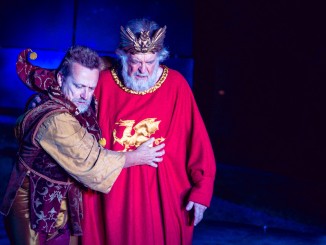
When I consider King Lear I think of the high grand tragedy, the demands of the title role and the master actors who have played him, and I conjure the harrowing image of the old man against the storm on the heath. It was pleasing to be reminded that the play begins (where it all begins really) with humorous sexual bawdy concerning the mother of Gloucester’s bastard son Edmund – “good sport at his making” - rather than anything loftier. The action of this production of King Lear plays out on a large circular stage by designer Jessika Verryt – an image of a flat earth that at any moment they could teter off. It is a fitting image for a play that contains the gamut of human experience: family feuds; wisdom and madness, power and greed; compassion and the worst inhumanity and violence mankind is capable of. The mix of themes high and low and the damning portrait of humankind is the best stuff of Mr. William Shakespeare. But what truly elevates Lear specifically from others in his canon is its focus on our weakness and mortality. Death not by the swift sword, but - to borrow the sentiment of another Shakespeare tragedian - death by a thousand natural cuts. Verryt’s stage also becomes the wheel of time that will catch all in the end be they Kings, Popes, academics: the tragedy of the aging; decay of the body and the mind.

At the far side of outdoor lawn at the Old Arts Quad are images of great beauty: the heavens, the cosmos. Behind them are shining lampposts that dot the paths behind the set that by happy accident seem extend out and back, enlarging the vista.  Brad Gledhill’s lighting complements the disappearing light of the out in the open evening. We are situated amongst this all too: tiered seating on two sides is like a sheer cliff, and we look down at the players from above. Edmund speaks of the folly of blaming and crying out to the heavens as if “if we were villains by necessity; fools by heavenly compulsion”. In Director Lisa Harrow’s production her figures are all too earth bound, focussed on themselves and their own quest for power, cut off from anything higher or worthier. Making her directorial debut, Harrow presents a production that is grounded, uncluttered, and where the text is King.

25Jul/110

REVIEW: Othello (Peach Theatre Company)

Honestly, Iago... [by James Wenley]

Othello Peach Theatre Company

Who is Othello really about?

It might be called Othello, but this one is very much Iago’s show.

Iago, the villain in Shakespeare’s Othello, has long threatened to outshine the titular tragic hero. Shakespeare for one gave him substantially more lines and a relentless destructive driving force, plotting to destroy the Moor that he says he hates. Why Iago does what he does has forever been debated by the academics, and his motivations make him a continually fascinating character, an interpretative draw card for directors and the actors who play him. This is not to diminish Othello’s story, rich in its own issues of identity, difference and the tragic fall, but Iago is far more fun. Especially, in Jesse Peach’s production.